How to avoid unlicensed gambling sites: safe play guide
Every year, thousands of U.S. players lose money on unlicensed gambling sites that offer no player protection, rigged games, and zero legal recourse. Unlicensed platforms captured 74% of U.S. online gambling revenue in 2024, exposing players to fraud and legal risk. This guide shows you how to verify gambling licenses, identify legitimate state-regulated platforms, and use PWA technology for secure mobile play. You’ll learn practical steps to protect your funds and personal data while enjoying legal online gambling.
Table of Contents
- Key takeaways
- Understand the risks of unlicensed gambling sites
- Check state legality and find authorized online gambling sites
- Verify gambling licenses and detect fake or offshore sites
- Optimize mobile gambling with PWA-based licensed platforms
- Find the best licensed gambling sites with PWA Wager
- How to avoid unlicensed gambling sites: frequently asked questions
Key Takeaways
| Point | Details |
|---|---|
| Verify licenses with regulators | Always verify operator licensing by visiting your state’s gaming regulator website. |
| Play only in legal states | Playing only in fully legal and regulated states protects you from unlicensed operators. |
| Avoid unlicensed sites | Unlicensed sites lack protections, risk fraud, and offer no recourse in disputes. |
| PWA for secure mobile play | Licensed operators use PWA for secure mobile play. |
Understand the risks of unlicensed gambling sites
Unlicensed gambling platforms operate outside regulatory oversight, leaving you vulnerable to multiple threats. These sites don’t answer to state gaming commissions, so they can manipulate game outcomes without consequence. When disputes arise over winnings or account issues, you have zero legal recourse. Unlicensed sites accounted for 74% of U.S. online gambling revenue in 2024, showing how widespread this problem has become.
The financial dangers extend beyond rigged games. Unlicensed operators often fail to protect your banking information, leading to identity theft and unauthorized charges. Your deposits may disappear overnight if the site shuts down unexpectedly. Unlike legal US online casinos that maintain segregated player funds and offer dispute resolution, unlicensed platforms can simply vanish with your money.
Players also face potential legal consequences depending on state laws. While prosecution of individual players is rare, using unlicensed sites can complicate tax reporting and create financial paper trails that raise red flags. Some states explicitly prohibit online gambling with unlicensed operators, putting you at risk of fines or other penalties.
The illegal market continues growing despite legalization progress in multiple states. Unlicensed sites attract players with unrealistic bonuses and lax age verification, creating environments where minors can gamble and problem gambling goes unchecked. These platforms lack responsible gambling tools like deposit limits, self-exclusion options, and links to support resources. Understanding risks of unlicensed casinos helps you make informed decisions about where to play.
“Unlicensed gambling sites operate in legal gray areas, offering no player protections, no fairness guarantees, and no accountability when problems arise. Players risk losing everything with zero recourse.”
Key warning signs of unlicensed operations include:
- Missing or vague licensing information in website footers
- No physical address or contact information for the operator
- Unrealistic bonus offers that seem too good to be true
- Poor website security with no SSL encryption
- Limited or no payment options from reputable processors
- Absence of responsible gambling tools and resources
Check state legality and find authorized online gambling sites
Your first step in avoiding unlicensed sites is understanding where online gambling is actually legal. Online casinos are legal in CT, DE, MI, NJ, PA, RI, WV, and ME as of 2026. Each state maintains its own gaming commission that licenses and regulates operators. Playing outside these jurisdictions means using unlicensed platforms that lack legal oversight.

State gaming commissions publish official lists of authorized gambling sites on their websites. These lists represent the only legal options for online play in each state. Visit your state’s gaming commission website directly rather than relying on third-party directories that may include unlicensed operators. Most commissions update their authorized lists regularly as new operators receive approval.
Each state offers different forms of legal online gambling. Some permit only sports betting, while others allow full casino gaming including slots, table games, and poker. Understanding your state’s specific regulations helps you identify legitimate options and avoid sites operating illegally in your jurisdiction. Check legal online gambling by state for current regulations and authorized platforms.
| State | Online Casinos | Sports Betting | Poker | Gaming Commission Website |
|---|---|---|---|---|
| New Jersey | Legal | Legal | Legal | nj.gov/oag/ge |
| Pennsylvania | Legal | Legal | Legal | gamingcontrolboard.pa.gov |
| Michigan | Legal | Legal | Legal | michigan.gov/mgcb |
| Connecticut | Legal | Legal | No | ct.gov/dcp/gaming |
| West Virginia | Legal | Legal | No | wvlottery.com |
Most state gaming commissions provide license verification tools on their websites. These searchable databases let you confirm whether a specific operator holds a valid license. Enter the casino name or license number to see current status, any disciplinary actions, and license expiration dates. This independent verification protects you from sites claiming fake licenses.
Pro Tip: Bookmark your state gaming commission’s authorized operator list and check it before signing up for any new gambling site. Commissions remove operators who lose licenses or face regulatory action, so regular checks ensure you’re playing at currently authorized platforms.
Beyond state lists, look for casinos displaying current license seals prominently on their homepages. Legitimate operators proudly showcase their regulatory compliance. Compare the information on these seals against your state commission’s records to confirm authenticity. Some unlicensed sites create fake seals hoping players won’t verify them. Cross-referencing with official sources at authorized online casinos list catches these fraudulent claims.
Understand that finding reputable casinos requires checking multiple factors beyond just license status. However, valid state licensing forms the foundation of any trustworthy gambling platform.
Verify gambling licenses and detect fake or offshore sites
Once you’ve identified potentially licensed sites, verify their credentials through multiple checks. Start by examining the casino’s website footer, which should display license information including the issuing authority, license number, and validity dates. Legitimate operators make this information easy to find. If you have to dig through multiple pages or can’t locate licensing details, treat that as a red flag.
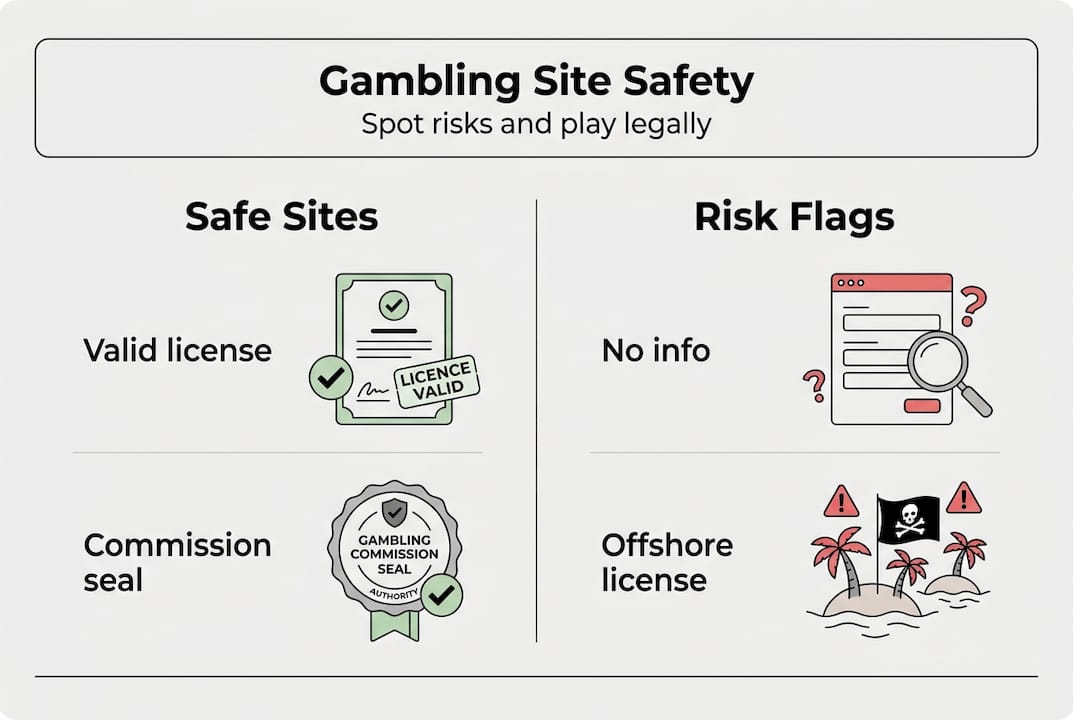
Take the license information and verify it independently on the official state regulator’s website using their lookup tool. Never trust the casino’s claims alone. Enter the license number or operator name into your state gaming commission’s database. The results should match exactly what the casino displays. Any discrepancies indicate potential fraud.
Follow these verification steps:
- Locate license details in the casino website footer or About Us page
- Note the licensing authority, license number, and operator legal name
- Visit your state gaming commission’s official website directly
- Use the license verification or operator lookup tool
- Confirm all details match and the license status shows as active
- Check for any disciplinary actions or compliance issues in the regulator’s records
Beware of offshore sites using white label operations that falsely claim standard international licenses like those from Malta Gaming Authority or UK Gambling Commission. While these are legitimate licensing bodies, they don’t authorize online gambling for U.S. players. Sites displaying only these licenses cannot legally serve American customers. Some offshore operators exploit player confusion about licensing jurisdictions to appear legitimate.
| License Type | Legitimate for U.S. Players | Verification Method |
|---|---|---|
| State Gaming Commission | Yes, if from your state | State regulator website lookup tool |
| Malta Gaming Authority | No, not valid for U.S. | Not applicable for American play |
| UK Gambling Commission | No, not valid for U.S. | Not applicable for American play |
| Curacao eGaming | No, offshore jurisdiction | Avoid these sites entirely |
| Kahnawake Gaming | No, offshore jurisdiction | Avoid these sites entirely |
State-specific licensing creates an important nuance. A casino licensed in New Jersey cannot legally serve Pennsylvania players, even though both states have legal online gambling. Each state requires separate licensing. Verify that any casino you use holds a valid license specifically for your state of residence. Playing at a site licensed in a different state puts you in the same risky position as using an unlicensed platform.
Pro Tip: Create a verification checklist before depositing money at any new gambling site. Confirm the license matches your state, verify it through official channels, and check that the site uses secure HTTPS connections. This five-minute process protects you from costly mistakes.
Watch for common tactics unlicensed sites use to appear legitimate. Some display fake regulatory seals that link to non-existent agencies or copied versions of real regulator websites. Others claim to be “in the process” of obtaining licenses without providing application numbers or timelines. Legitimate operators receive full licensing before accepting real money wagers. Sites at licensed casinos verified have completed this rigorous approval process.
Licensed platforms also provide clear dispute resolution and data security procedures as required by regulators. If you can’t find information about how the site handles player complaints or protects your data, that’s another warning sign. Understanding complete license verification steps ensures you catch fraudulent operations before risking your money.
Optimize mobile gambling with PWA-based licensed platforms
State-licensed gambling sites increasingly use Progressive Web App technology to deliver secure, high-performance mobile experiences. PWAs function like native apps but run through your mobile browser, eliminating download requirements while maintaining app-like speed and functionality. This technology offers significant advantages for legal online gambling, particularly around compliance and security.
Licensed platforms use PWA technology for responsive mobile-optimized experiences ensuring geolocation law compliance. PWAs integrate seamlessly with device location services, automatically verifying you’re within state boundaries before allowing real money play. This geofencing prevents accidental violations of state gambling laws and protects operators from regulatory penalties.
PWA benefits for legal mobile gambling include:
- Instant access through mobile browsers without app store downloads
- Automatic geolocation verification ensuring state law compliance
- Enhanced security through HTTPS encryption and secure payment processing
- Offline functionality for reviewing account history and game rules
- Push notifications for responsible gambling reminders and account alerts
- Regular updates deployed instantly without requiring manual downloads
The geolocation features in PWAs create an important safety layer. If you travel to a state where online gambling is illegal, the PWA automatically blocks access to real money games. This prevents you from unknowingly violating laws in different jurisdictions. Licensed sites must implement these geographic restrictions to maintain their regulatory approval.
PWA technology also enhances security compared to traditional mobile websites. The apps cache essential data locally on your device, reducing server requests that could expose your activity to interception. Payment processing happens through encrypted channels that meet banking industry standards. Licensed operators using PWAs undergo regular security audits required by state gaming commissions.
To start using PWA gambling platforms:
- Visit a licensed casino’s website through your mobile browser
- Look for the “Add to Home Screen” or “Install” prompt
- Accept the installation to create a home screen icon
- Open the PWA like any other app on your device
- Allow location access when prompted to enable geofencing
- Verify your location is confirmed before making deposits
Unlicensed sites rarely invest in proper PWA development because they don’t face regulatory requirements for geolocation compliance. If a gambling site lacks mobile optimization or doesn’t implement location verification, that’s another indicator of unlicensed operation. Legitimate platforms prioritize these features to maintain their legal status.
The best PWA gambling apps combine cutting-edge technology with full regulatory compliance. These platforms offer the convenience of mobile apps while ensuring you’re always playing legally within state boundaries. The technology prevents access from unauthorized locations, protecting both you and the operator from legal complications.
PWAs also support responsible gambling tools more effectively than traditional mobile sites. Push notifications can remind you of deposit limits, session time limits, and cooling-off periods you’ve set. The apps integrate with state self-exclusion programs, automatically blocking access if you’ve enrolled in these protection programs. These features demonstrate how technology and regulation work together at real money casino apps to create safer gambling environments.
Find the best licensed gambling sites with PWA Wager
Navigating the complex landscape of state-licensed gambling sites becomes simple with PWA Wager’s curated platform listings. We verify every casino’s licensing status through official state regulators before including them in our directories. Our legal gambling by state guides show you exactly which platforms operate legally in your jurisdiction, eliminating guesswork about licensing legitimacy.
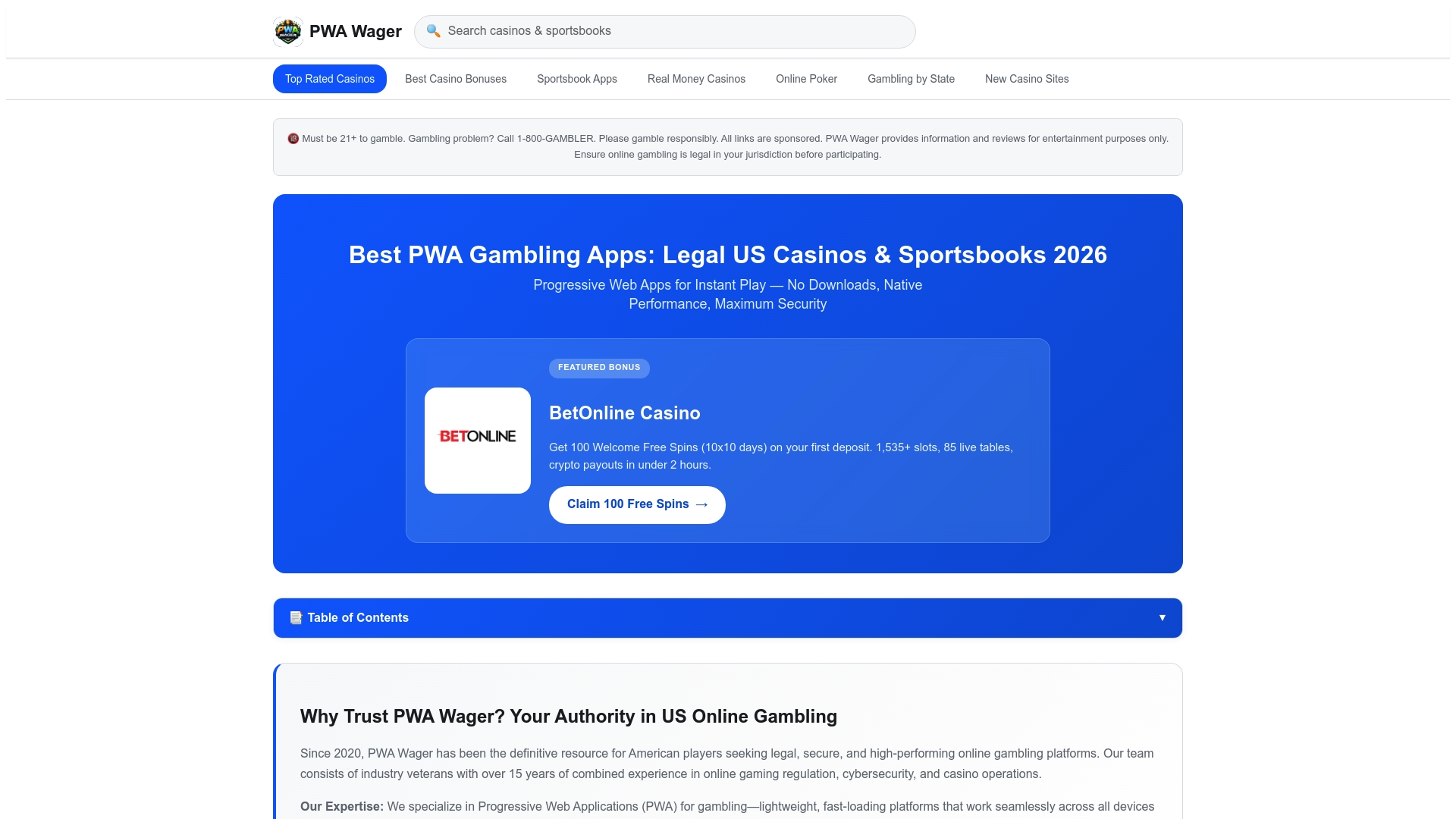
Every platform we recommend offers PWA-optimized mobile access for secure, convenient play that meets state geolocation requirements. You’ll find detailed reviews covering licensing credentials, security measures, game selection, and payment options. Our top rated casinos page highlights operators with the strongest regulatory compliance records and player satisfaction ratings. We also feature exclusive bonuses like those at BetOnline Poker bonuses available only through our verified partners, ensuring you get maximum value from fully licensed platforms.
How to avoid unlicensed gambling sites: frequently asked questions
How do I verify if an online casino is licensed?
Check the casino’s website footer for license information, then verify it independently on your state gaming commission’s website using their license lookup tool. The license must be issued by your specific state’s regulator, not international bodies like Malta or UK commissions. Cross-reference the license number and operator name to ensure they match official records exactly.
Which U.S. states allow legal online gambling?
As of 2026, online casinos operate legally in Connecticut, Delaware, Michigan, New Jersey, Pennsylvania, Rhode Island, West Virginia, and Maine. Each state regulates gambling independently, so licensed operators in one state cannot legally serve players in another state. Visit legal gambling by state for current regulations and authorized platforms in your jurisdiction.
What technologies ensure a gambling site is safe on mobile?
Licensed sites use Progressive Web App technology with built-in geolocation verification to ensure compliance with state boundaries. PWAs provide HTTPS encryption, secure payment processing, and automatic location checks before allowing real money play. These features prevent access from unauthorized jurisdictions and protect your financial data through banking-grade security protocols.
Can unlicensed sites be identified easily?
Yes, unlicensed sites typically lack clear licensing information in their footers, display only offshore licenses like Curacao, or show no regulatory credentials at all. They often feature unrealistic bonuses, poor website security, and missing responsible gambling tools. Always verify licensing through official state regulator websites rather than trusting claims made on the casino’s site.
What are the risks of playing on unlicensed sites?
Unlicensed platforms offer no player protections, allowing them to manipulate game outcomes, refuse withdrawal requests, and expose your financial data to theft. You have zero legal recourse when disputes arise since these sites operate outside regulatory oversight. Players also face potential legal consequences in states that prohibit gambling with unlicensed operators, plus complications with tax reporting and financial records.